City of London Livery Companies: A Heraldic Tour
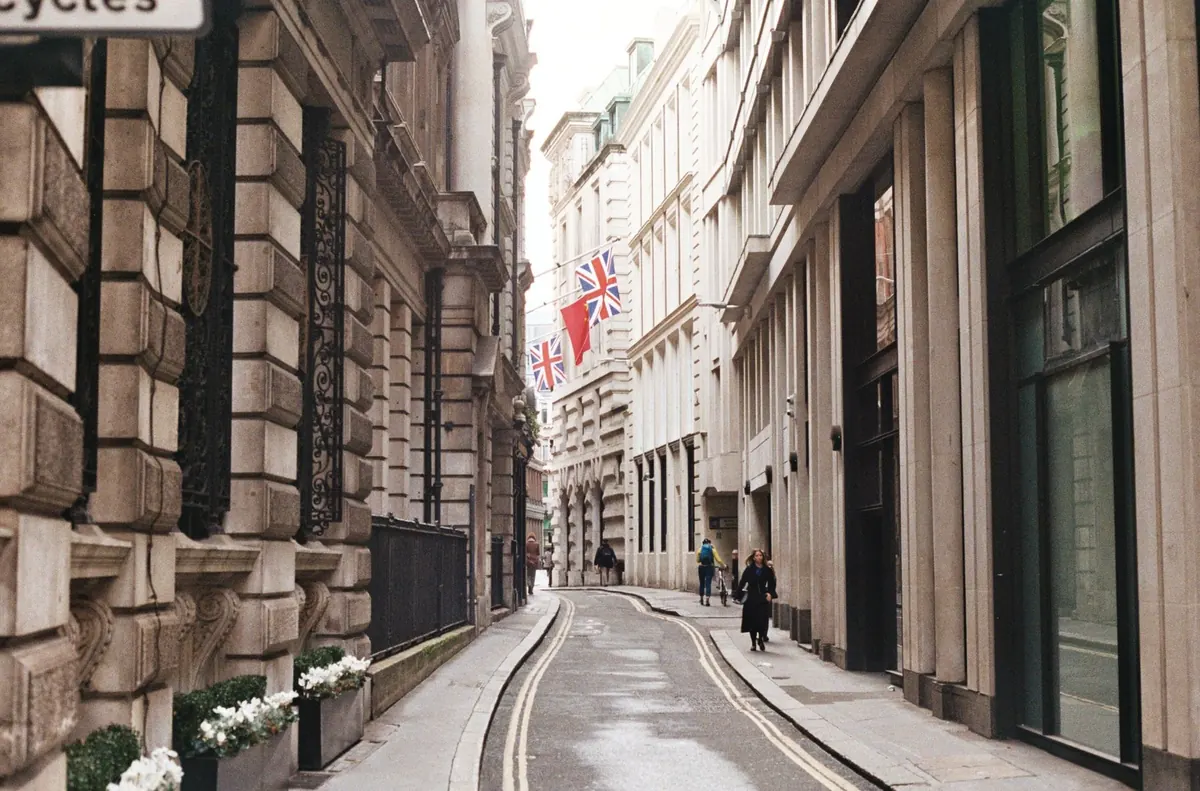
The City of London keeps its heraldry in plain sight. Step off Cheapside, look up at a carved keystone, or pause at a pair of wrought-iron gates in a quiet lane, and you may be looking at arms granted five hundred years ago to a company of merchants that is still trading. London's livery companies began as medieval guilds — the Mercers, the Fishmongers, the Clothworkers and more than a hundred others — and although the trades that made them have largely gone, their arms survive in stone, glass, paint and silver across the Square Mile.
What a livery company's arms actually are
Start with a point of vocabulary, because it clears up most confusion. A coat of arms is the whole achievement: shield, helmet, crest, mantling and, where granted, supporters and a motto. The crest is the device that sits on top of the helm, not the shield itself. Ask about a "family crest" at the College of Arms and you will be politely corrected.
Livery company arms are corporate arms. They belong to the company as a body, not to any individual member, and they are not inherited. A petition goes to the College of Arms in Queen Victoria Street, a design is worked up with the company's officers, and the grant is made under the authority of the Earl Marshal. The blazon — the formal wording describing the arms — has to be precise enough for any herald to redraw the shield from the words alone.
Notice the helmet as well. Corporate arms use a different helm from those of peers and royalty, and in everyday use you will often see only the shield: on a gate, a bench, a fire surround or a piece of hall silver. The full achievement tends to appear on the company's own documents and its best plate.
The Great Twelve: a pecking order you can read
Precedence matters in the City, and the companies keep a strict order. The twelve most senior are known as the Great Twelve, a ranking that grew out of medieval arguments about who walked where in procession.
- Mercers
- Grocers
- Drapers
- Fishmongers
- Goldsmiths
- Skinners
- Merchant Taylors
- Haberdashers
- Salters
- Ironmongers
- Vintners
- Clothworkers
The Skinners and Merchant Taylors sit at six and seven, and rather than settle the matter they agreed to alternate: one year the Skinners take sixth place, the next the Merchant Taylors do. It is often said, with more confidence than evidence, that "at sixes and sevens" comes from that arrangement.
Reading the trade in the shield
Most company shields do exactly what heraldry is meant to do: identify the owner from a distance. The charges frequently describe the trade using the tools of the trade.
- The Grocers carry nine cloves, three, three and three, on a chevron — the mark of a company that dealt in spices when pepper was worth its weight in silver.
- The Clothworkers show a teasel and two habicks, the hooked tools used to raise the nap of finished cloth.
- The Salters charge their shield with covered salt cellars, the vessels used to serve salt at table.
- The Vintners take the wine tun, the cask, as their device.
- The Skinners bear ermine, one of the classic heraldic furs, which suits a company whose living came from fur.
- The Drapers carry three triple crowns on blue, traditionally linked to the Three Kings.
- The Mercers place a crowned maiden holding a child at the centre of their arms, a reference to the Virgin Mary.
- The Goldsmiths answer with a cross voided between four lions' heads.
Others are less literal. The Merchant Taylors' shield shows a royal tent between two parliament robes. The Haberdashers use barry nebuly, a wavy pattern that may nod to wool or to cloud, with a lion on a bend. The Apothecaries went to classical myth and put Apollo, with a serpent at his feet, at the heart of their arms.
Telling them apart in the street
Three habits help. Count the charges first: heraldry loves threes. Then look at the crest, which is often more distinctive than the shield it sits on. Finally, if a human figure appears, assume a saint, an angel or a biblical scene rather than a portrait of anyone real — very few people appear in pre-modern heraldry.
Saints, mottos and the messages above the shield
Livery companies were religious confraternities as much as trade bodies, and their patron saints turn up on halls, chapels and plate throughout the City. The upper half of an achievement often carries more meaning than the shield itself.
Mottos tend to be short and moral rather than commercial. The City's own is Domine dirige nos — "Lord, direct us" — and the companies followed the same instinct, choosing phrases about faith, unity and fair dealing. They are painted on a scroll below the shield, usually in Latin and occasionally in English, and they are often the quickest way to identify arms you cannot place.
Supporters, crests and the odd beast
Supporters — the creatures holding up the shield — are the showiest part of an achievement, and they are not handed out casually. They are granted rather than assumed, so a company that has them is announcing both standing and substance. The Fishmongers have two mermen, an obvious nod to waters and fish. Dragons, lions and griffins appear among the older companies. Above the shield, crests range from ships and sheaves to animals with no connection to the trade at all, chosen for heraldic virtue rather than relevance.
New companies, new grants
The roll is not closed. Over the past half-century the City has admitted companies for professions the medieval guilds never imagined: accountants, actuaries, information technologists and management consultants among them. A new company seeking arms follows the same route as its older cousins — a petition to the College of Arms, a design agreed with the officers, and a grant that fixes the blazon. The result is a living example of an art form many people assume stopped in the seventeenth century.
Where to see City livery heraldry for yourself
Much of the best material sits on private property, but plenty can be seen without an invitation.
- Livery halls. Most are working buildings, not museums, but many take part in Open House Festival each September and some run occasional tours. Goldsmiths' Hall on Foster Lane and Stationers' Hall off Ludgate Hill are good names to start with.
- Guildhall. The Great Hall and the surrounding buildings carry memorials, windows and carving tied to the companies and to civic life.
- City churches. Several hold windows, monuments and plate bearing company arms. St Lawrence Jewry, the City's civic church, is especially rich in them.
- The Lord Mayor's Show. Each November the companies process through the streets with banners, badges and liveries on display.
- The United Guilds Service. Held at St Paul's Cathedral in the spring, it gathers the companies in one place.
- Guildhall Library and the College of Arms. If you want to identify arms properly, the written records are the place to begin.
Two practical notes. Livery halls are private working buildings, so check ahead rather than turning up on spec. And if you photograph a shield you cannot place, note the field division, the number of charges and the motto before you go hunting for a name; those three details will usually solve it. Once you can read a blazon, these coats of arms stop being decoration and become what they always were: a short, exact statement of what each company was for.
Photo: Oli / Pexels

Seasonal Heraldry: Christmas Symbols in Coats of Arms
Holly, oak, stars and candles: how wintry and Christmas-themed charges appear in coats of arms, how to...
Designing a Crest for a Welsh Family: Traditions and Tips
Welsh family crests draw on dragons, leeks and a naming history all their own. Here is how to design one...