A Beginner's Guide to Heraldic Symbols and Their Meanings
The first thing to know about heraldic symbols is that nobody ever agreed on a single dictionary of them. A medieval knight did not leaf through a book, discover that a lion stood for courage, and order one for his shield. He chose a lion because lions were the business of kings, or because his surname sounded like one, or because his overlord already carried three. Yet across six centuries of use, patterns did settle. Learn those patterns and a shield stops being decoration and starts reading like a sentence.
The Grammar of a Shield
Before meanings, structure. A coat of arms is described in a blazon, and the blazon always works in the same order: the field first, then the charges upon it, from top to bottom and centre outwards. "Azure, a lion rampant Or" tells you the background before the beast — blue field, gold lion.
Tinctures come in two metals and five colours, plus furs such as ermine:
- Metals: Or (gold) and argent (silver)
- Colours: gules (red), azure (blue), sable (black), vert (green), purpure (purple)
- Furs: ermine, vair and their variants
The rule of tincture — never metal on metal, never colour on colour — is why so many arms are gold on blue or silver on red. It is also why a shield reads clearly from a distance, which was rather the point.
Charges divide into two families. Ordinaries are the broad geometric bands: the chief, fess, pale, bend, chevron, cross, saltire and bordure. Everything else — lions, keys, oak trees, scallop shells — is simply a charge. Knowing which is which tells you where to look first.
Lions and Other Beasts of the Field
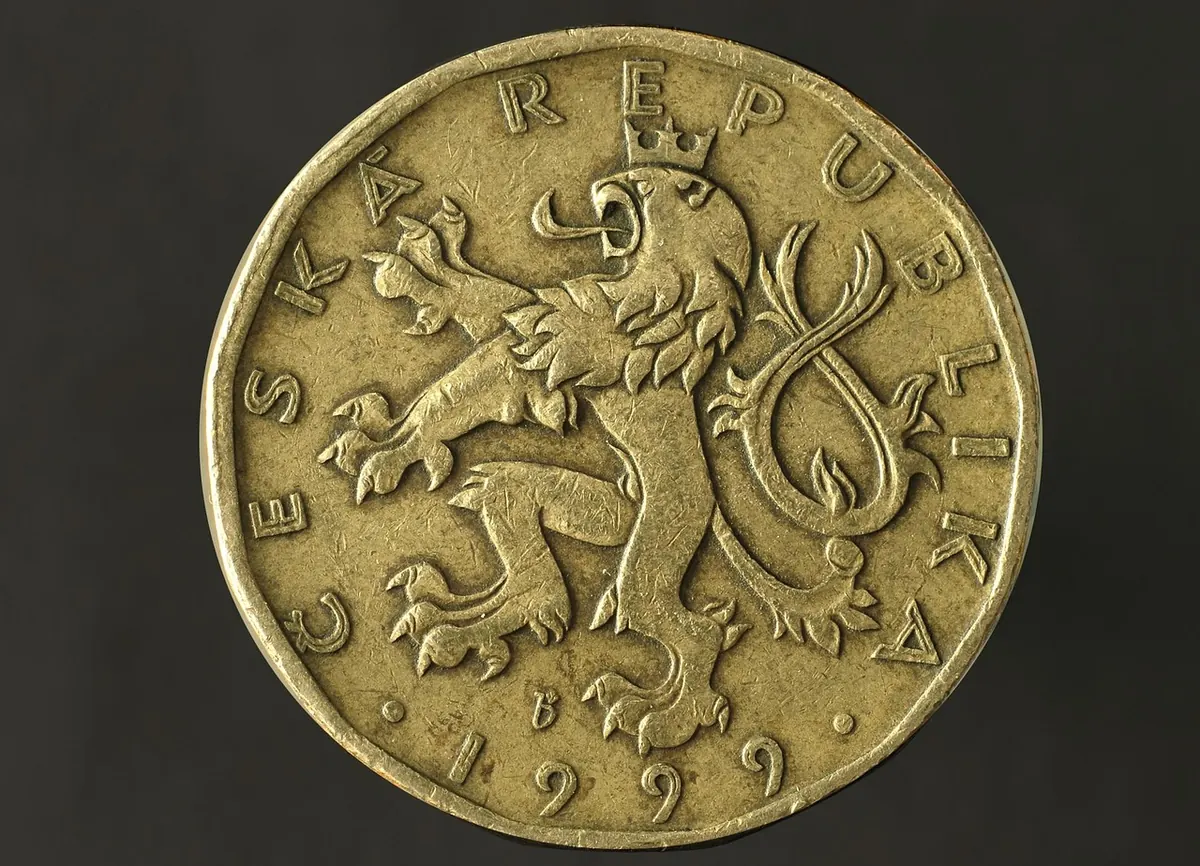
The lion is the most common charge in British heraldry, and its meaning depends heavily on how it stands. A lion rampant rears upright on one hind leg — courage, nobility, royal authority. A lion passant walks, one paw raised; couchant lies down; sejant sits. The Royal Arms of England show three gold lions passant guardant (walking, head turned to the viewer) on red, while Scotland's arms carry a red lion rampant on gold within a flory counter-flory tressure. Same animal, entirely different statement.
Posture matters as much as species. A stag's head caboshed — cut cleanly behind the ears — speaks of the hunt and, in older readings, of long life and renewal. The boar stood for ferocity in battle and, oddly, for hospitality; a boar's head was a feast dish long before it was a charge. Hounds, horses, bulls and rams all appear, usually borrowed from a family's lands, trade or marriage rather than chosen for a virtue.
Eagles, Falcons and the Rest of the Air
An eagle displayed, wings spread and head turned to its right, is the classic emblem of empire and sovereignty. The double-headed eagle, looking east and west at once, belonged to the Byzantine world and was later taken up by Russia and the Holy Roman Empire — a claim to rule in both directions.
Falcons and hawks point to hunting, swiftness and the pursuits of the nobility. Smaller birds are less exalted. The martlet, a swallow-like bird drawn without feet, is a cadency mark in the English system: it tells you the bearer was a fourth son, and its presence is genealogy rather than poetry. Ravens, peacocks in their pride, swans and doves with olive branches each carry their own long associations.
Crosses: One Shape, Many Meanings
No charge is more widespread, and no charge is more varied. The plain cross of St George belongs to England; the saltire, or diagonal cross, to Scotland as St Andrew's. Beyond those, heraldry distinguishes dozens of forms with precise names:
- Cross crosslet: each arm ending in a small cross — faith carried outwards
- Cross fleury: arms ending in lily-like flourishes
- Cross moline: arms forked like mill-rinds, linked with feudal tenure
- Cross pattée: arms narrow at the centre and broad at the ends, the crusader's cross
A cross may indicate a crusading ancestor, a connection with a religious house, or nothing more than a surname that happens to be Cross. When a cross spans the whole field it is an ordinary; when it sits upon the field it is a charge. That difference matters when you are reading a blazon.
Flowers, Trees and Growing Things
The fleur-de-lis is the great survivor of European heraldry: France's emblem, later read as a sign of purity and of the Trinity, and still scattered across arms as a mark of cadency. Roses carry political memory as much as botanical meaning — the red rose of Lancaster and the white of York — and the rose is also a Marian symbol. The thistle stands for Scotland; the shamrock for Ireland.
Trees and plants tend to speak of endurance and provision. Oak and acorns suggest strength and restoration, helped along by the Royal Oak that sheltered Charles II after Worcester. Wheat sheaves indicate harvest and plenty; a vine, prosperity; a laurel, victory.
Monsters and Everyday Objects
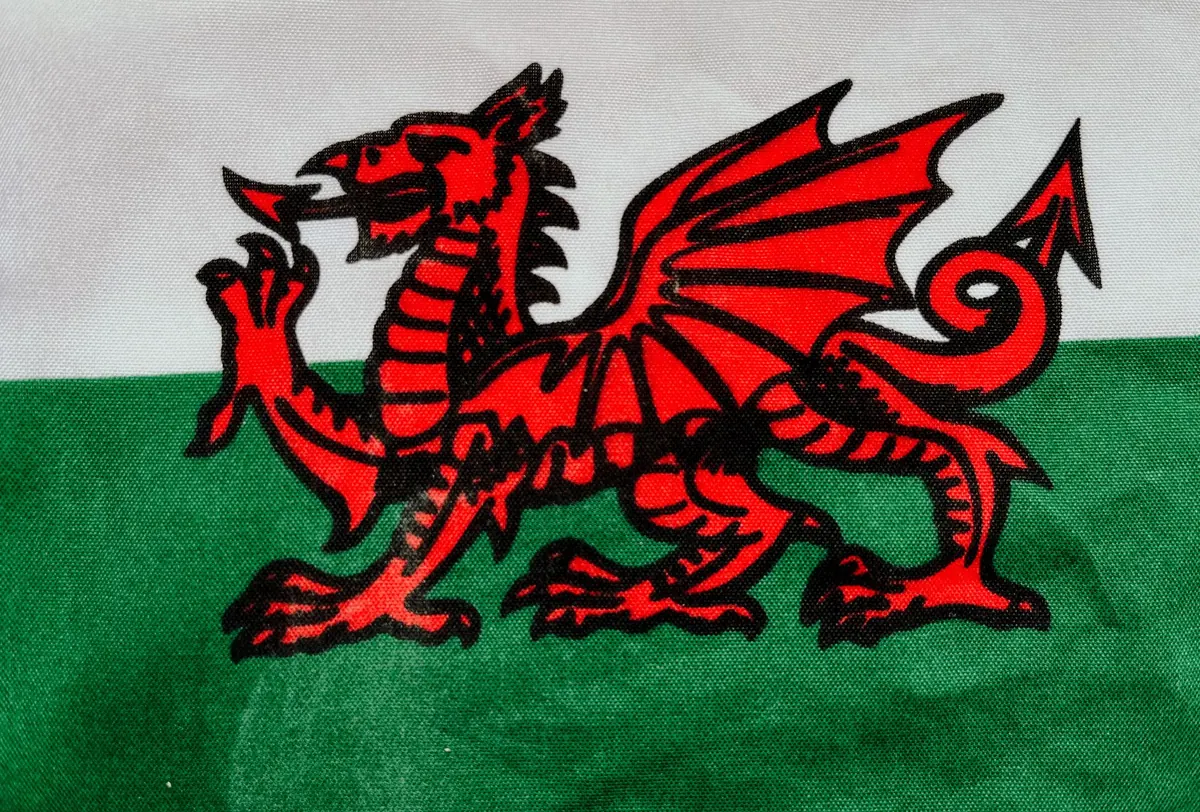
Mythical beasts blur the line between creature and warning. The griffin, part eagle and part lion, guards treasure and stands for vigilance and courage. The dragon, in Welsh hands, is a symbol of defiance and nationhood. The wyvern — a dragon with two legs and a barbed tail — appears in the arms of families across the West Country.
Objects are often more personal than symbolic. A scallop shell marks pilgrimage, especially to Santiago de Compostela. Keys point to St Peter, and therefore to the Church and to authority. Anchors mean hope and the sea; towers and castles mean defence, or simply record a fortress the family held; beehives mean industry.
When the Meaning Is a Pun
A great many arms are canting — they illustrate the name rather than a virtue. A family called Heron with herons on its shield, or a cross fitchée for a name that sounds like it, is not confessing anything deep. It is making itself memorable. When a charge seems oddly specific, ask what the surname sounds like before reaching for a symbolism dictionary.
Reading a Shield in Practice
Arms are personal property, granted to an individual and passed down by descent, so two families sharing a surname do not necessarily share a coat. That is why careful reading beats guesswork. Work through it in this order:
- Read the blazon in order: field, then charges, top to bottom.
- Note the tinctures and check them against the rule of tincture — anomalies usually mean you have misread something.
- Identify the attitude of any beast, since posture carries as much meaning as species.
- Look for cadency marks such as a martlet, crescent or mullet, which point to a younger son.
- Ask whether the charge puns on the name before assuming a moral meaning.
- Check your conclusions against a reputable source — the College of Arms, the Court of the Lord Lyon, or a good heraldry society — rather than a Victorian symbol dictionary, which invented far more than it preserved.
Treat the meanings in this guide as traditions rather than rules. They are the accumulated habits of a craft, not a code of law, and half the pleasure of heraldry lies in the reminder that a family's choices were often practical, political and occasionally rather funny. If you intend to use arms yourself, or to claim a particular coat, take advice from the relevant heraldic authority for your part of the United Kingdom before you commit anything to a shield, a sign or a letterhead.
Photo: XxXddddddddd / Pixabay

City of London Livery Companies: A Heraldic Tour
From the Mercers' crowned maiden to the Fishmongers' mermen, the City of London's livery companies carry...

Seasonal Heraldry: Christmas Symbols in Coats of Arms
Holly, oak, stars and candles: how wintry and Christmas-themed charges appear in coats of arms, how to...